
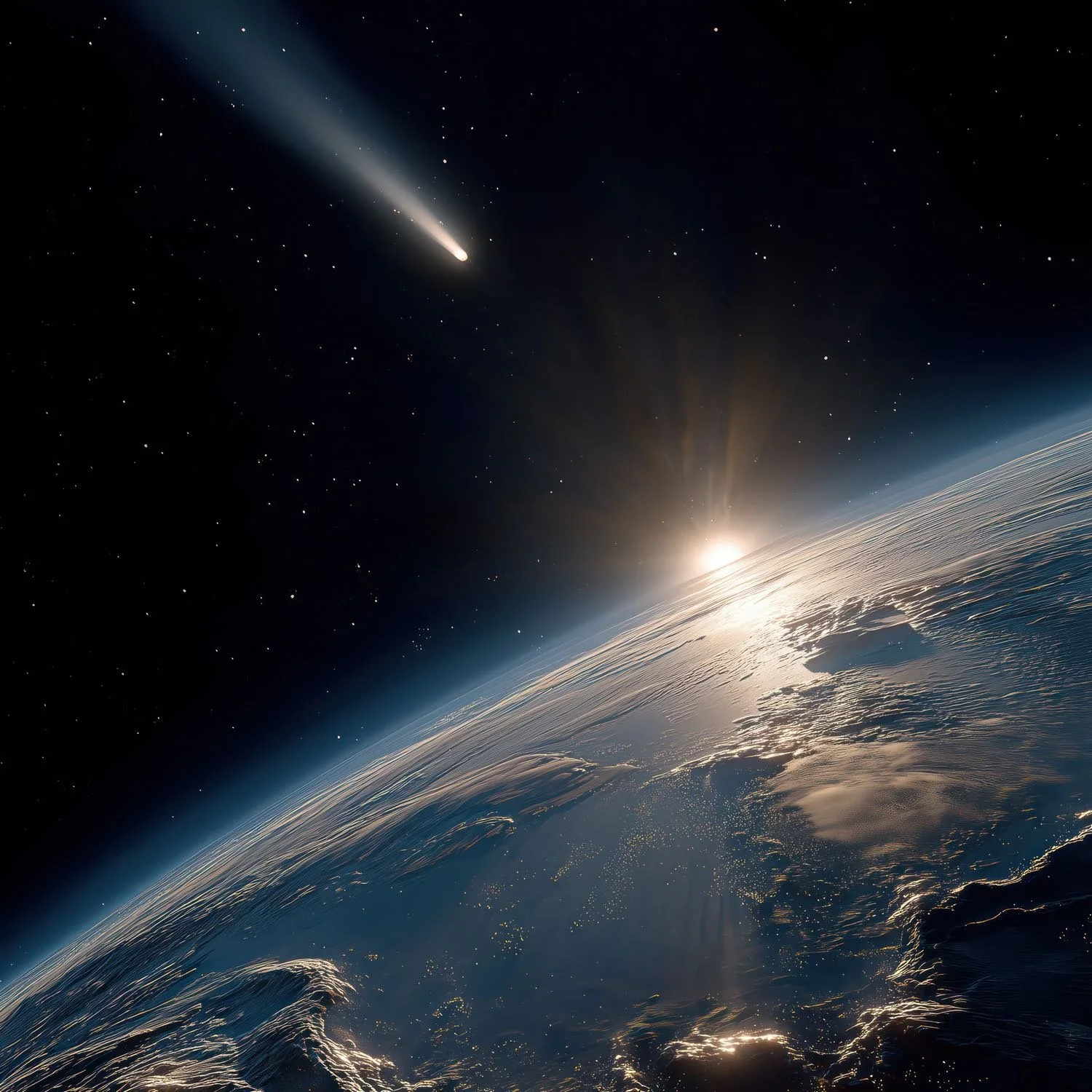



Recently, space scientists have made the unraveling of a mysterious object known as 3I/ATLAS and this object was swiftly turning into one of the most exciting astronomical discoveries of recent years. This object is very rare unlike normal comets that are part of our solar system and therefore it was extrasolar.
Through this beginner guide, you will be able to know what 3I/ATLAS is, the origin of it, the excitement of professional scientists on this discovery, and what is unique with it compared with other comets.
What Is 3I/ATLAS?
3I/ATLAS is an interstellar comet – a space object which was formed in a different star system and is merely going through our solar system.
The ATLAS sky-survey telescope in Chile, which is a component of the NASA planetary defense monitoring system, discovered it on July 1, 2025.
The name means:
- 3 – 3rd of kind of this object.
- I – Interstellar (externally in our solar system)
- ATLAS – It was discovered by the telescope system called ATLAS
Prior to this, two interstellar visitors had been verified by scientists prior to this:
- 1I/`Oumuamua (2017)
- 2I/Borisov (2019)
So 3I/ATLAS is the third object to be detected in interstellar that is sure.
Why Is 3I/ATLAS Special?
Most comets orbit the Sun repeatedly. But 3I/ATLAS does something different.
It Is Not Bound to the Sun
The comet is on a hyperbolic path and that is, it is moving faster than it can remain in our solar system. It is going to travel through it and move on to deep space infinity.
It Came out of another Star System.
Scientists assured that it had an interstellar origin since:
- Its speed is extremely high
- The gravity of the solar system cannot help explain its course.
- It is oriented towards the galactic plane of the Milky way close to Sagittarius.
This causes it to be a carrier of matter of another space.
When Did 3I/ATLAS Pass Near the Sun?
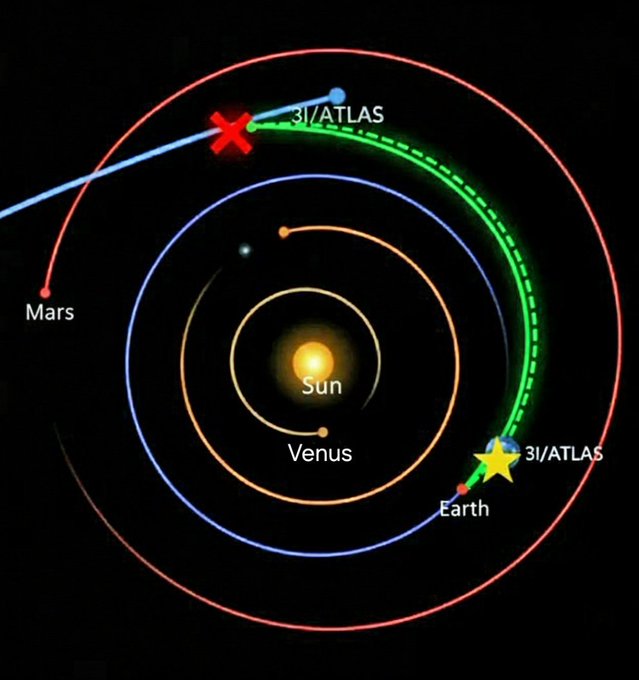
The comet got nearest to the Sun (so-called perihelion) at the beginning of October 2025, coming as close as 1.4 astronomical units (AU) – slightly further than the orbit of Mars.
Important facts:
- It posed no danger to Earth
- It never came particularly near our planet.
- It was so dim, that a naked eye could not see.
It could only be seen with using powerful telescopes.
What Is 3I/ATLAS Made Of?
The chemical properties were interesting as intriguing observations were made with advanced telescopes, such as James Webb Space Telescope.
Scientists found:
- Carbon dioxide gas (dominant)
- Water ice and vapor
- Carbon monoxide
- A comet has dust and gas that constitute a coma.
The Sun warms the comet, the ice is transformed into gas and forms a glow in the sky around the comet – the traditional comet shape.
How Big Is 3I/ATLAS?
Its actual size cannot be easily measured due to the gas surrounding the nucleus but approximations have been made:
- Nucleus diameter ranging between hundreds of meters and a number of kilometers.
- There are studies that indicate that it can be bigger than other interstellar objects that have been observed before.
It was very faint even at its brightest to the earth.
Why Scientists Are Excited About It
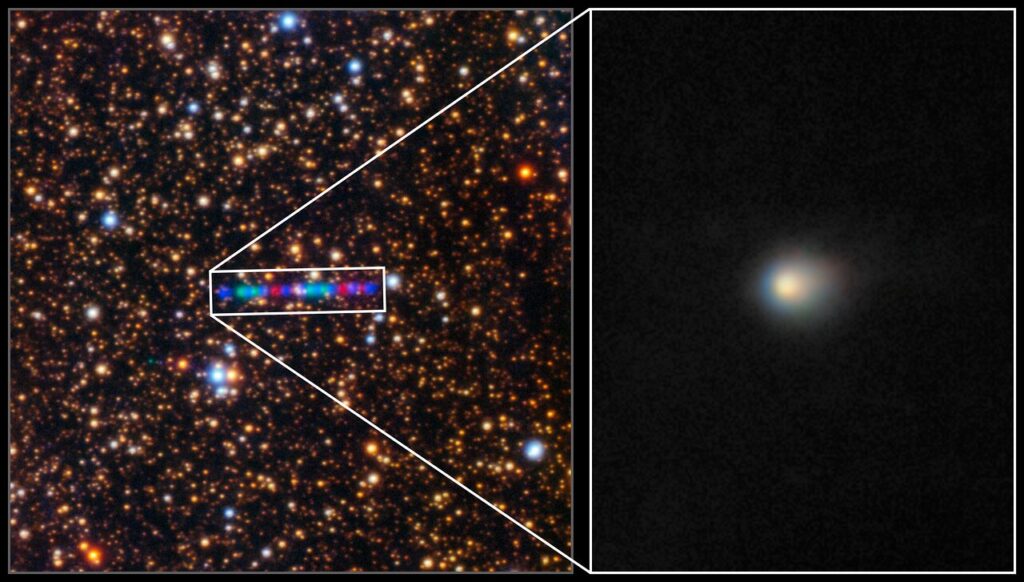
The significance of 3I/ATLAS is that the scientists will have a rare opportunity to research material that has been formed around another star.
Researchers hope to learn:
- The formation of planetary systems in the other solar systems.
- The chemical composition of star systems differs.
- The history and development of cosmogenic materials.
Other research indicates the probability of the comet being older than our sun system, which makes it a time capsule in the universe.
Could Humans Visit 3I/ATLAS?
It has been suggested that scientists will create next-generation spacecraft that will intercept similar interstellar objects in the future using advanced spacecraft methods. These missions may aid mankind to study material outside our solar system directly albeit experimentally.
Is 3I/ATLAS an Alien Object?
Online speculations indicated that it had artificial origins but astronomers firmly dismissed them.
Observations show:
- Normal comet behavior
- Chemical composition of nature.
- Every motion was explained by physics.
Experts ensure that it is a natural comet, and not a technology of aliens.
What Happens Next?
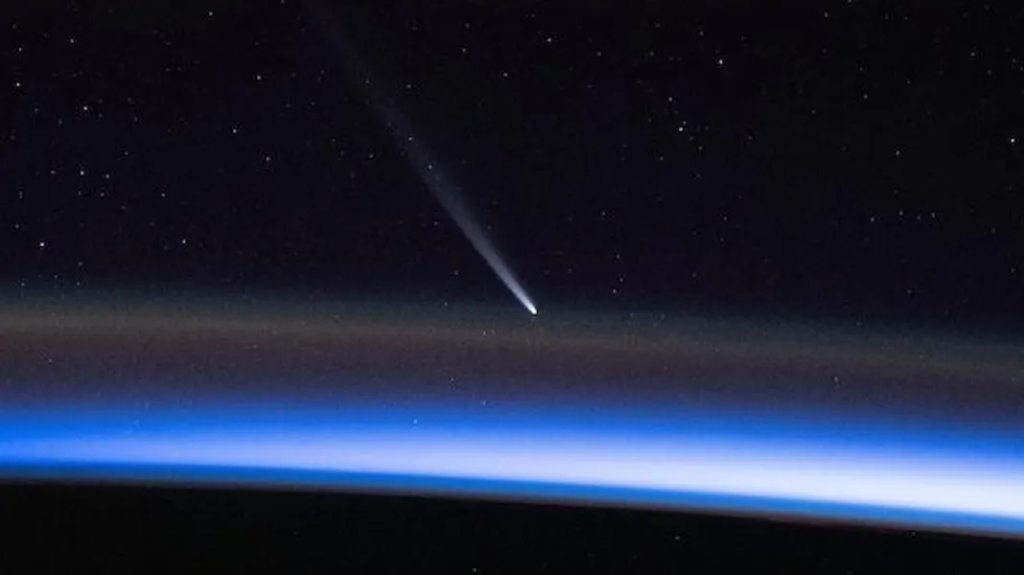
3I/ATLAS is leaving the solar system and it will never come back.
Nevertheless, there are new telescopes such as the Vera Rubin Observatory that will find numerous other interstellar visitors in future to assist scientists in learning more about our galaxy.
Final Thoughts
One of the most interesting findings in the contemporary astronomy is 3I/ATLAS. Being the only third known object in the universe that has ever been seen in the interstellar, it offers scientists a unique chance to study matter that has been derived near remote stars.
Leave a Reply