
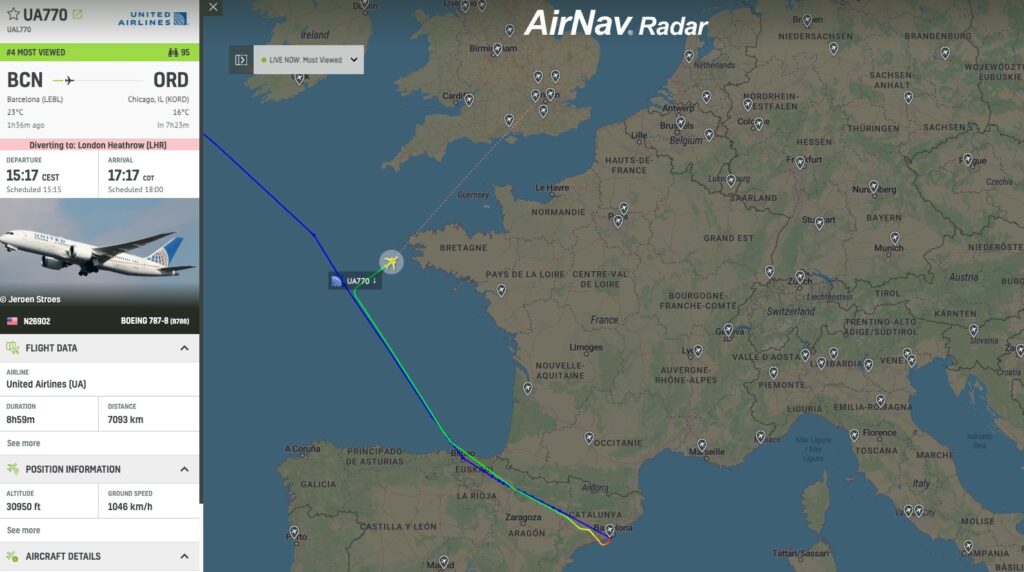
When United Airlines flight UA770 (Barcelona to Chicago) declared an emergency and diverted to London on July 22, 2025, it wasn't because of a visible fire or engine failure. It was because of the "invisible grit" of high-altitude physics: Cabin Pressurization. For TechRebot readers, here is the deep-tissue breakdown of why that Boeing 787-9 had …
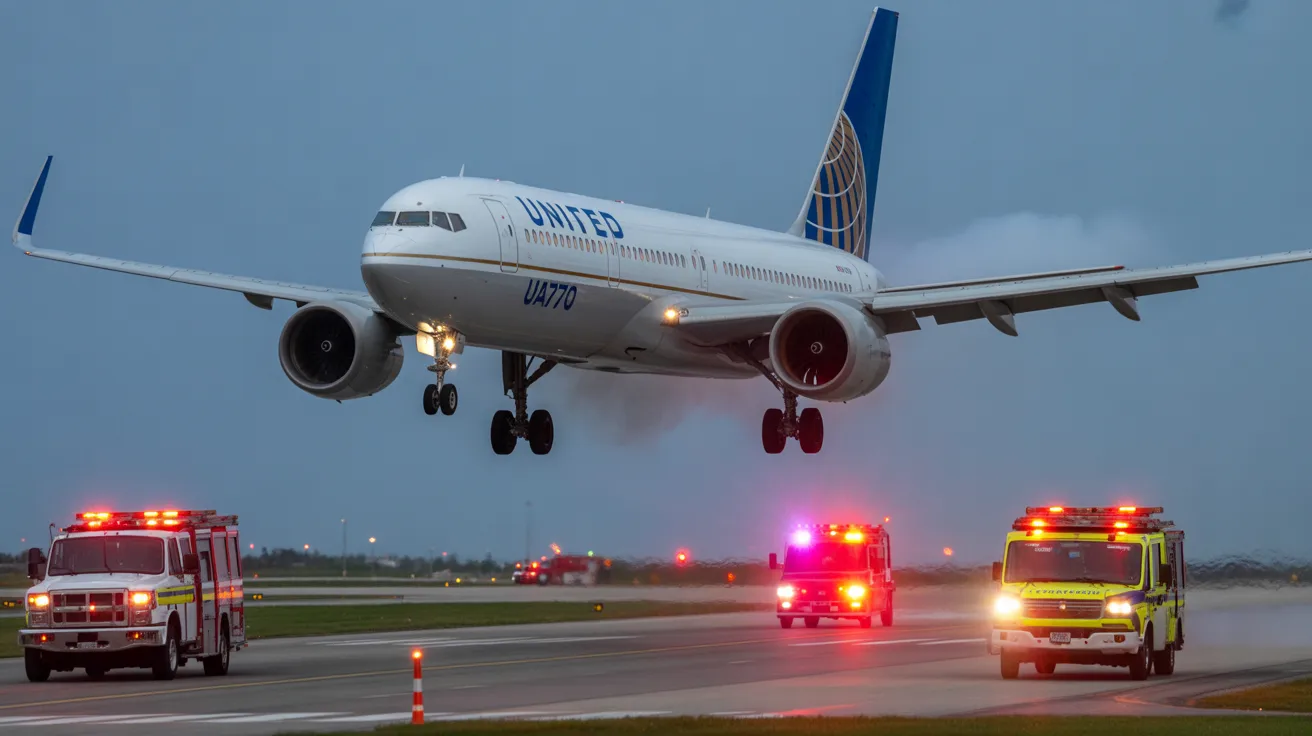
When United Airlines flight UA770 (Barcelona to Chicago) declared an emergency and diverted to London on July 22, 2025, it wasn’t because of a visible fire or engine failure. It was because of the “invisible grit” of high-altitude physics: Cabin Pressurization.
For TechRebot readers, here is the deep-tissue breakdown of why that Boeing 787-9 had to head for the ground.
1. The Physics of the “Invisible Pressure”
At 37,000 feet, the air outside a plane is too thin for humans to breathe. To keep you alive, the 787-9 Dreamliner acts like a giant balloon, pumping in air to create a “low-altitude” bubble inside the cabin.
- The Pressure Gap: The air inside is pushing out, and the thin air outside is barely pushing back.
- The Problem: UA770’s sensors detected a glitch in the pressurization controllers. If that system fails, the plane doesn’t just “leak”—it can lose the air you need to stay conscious.
2. Why the “Squawk 7700”?
The pilots used a “Squawk 7700” code. Think of this as a digital flare gun.
- The Logic: It tells every Air Traffic Controller in the area: “I have a problem that could get worse fast. Clear the way.”
- The Action: Even though the cabin pressure was still safe, the pilots didn’t wait for the “foam”—the actual emergency—to start. They followed the “grit” of the safety manual: Get down to 10,000 feet, where the air is thick enough to breathe naturally.
3. The Heathrow Choice: The “Physics of Landing”
Why London Heathrow (LHR)? A Boeing 787-9 is a “heavy” wide-body aircraft.
- Runway Grit: When a plane is full of fuel for a trans-Atlantic flight, it is incredibly heavy. You can’t just land it on a small local strip.
- The Math: You need a long, reinforced runway (like Heathrow’s Runway 27R) to handle the friction and braking force of a 250-ton jet landing early. Plus, Heathrow has the best technical teams to check the “why” behind the sensor failure.
4. No Oxygen Masks? (The Good News)
Many people think an emergency diversion means masks dropping from the ceiling. On UA770, that didn’t happen.
- The “Why”: The pilots caught the issue so early that the cabin pressure never dropped to the danger zone. By diving to a lower altitude immediately, they kept the “physics of the cabin” stable, so the masks stayed tucked away.
The UA770 Breakdown
| Detail | Fact | The “Why” |
| Aircraft | Boeing 787-9 Dreamliner | High-tech sensors spotted the error early. |
| Emergency Code | Squawk 7700 | Priority access to the nearest big runway. |
| Trigger | Pressurization Glitch | Prevented a loss of oxygen before it happened. |
| Landing Site | London Heathrow (LHR) | Longest runways for a heavy, fuel-laden jet. |
Final Verdict: UA770 wasn’t a “crash scare.” It was a masterclass in preemptive physics. The pilots saw a system under pressure, respected the grit of the warning sensors, and landed safely before a small glitch could become a real crisis.