Is eTraderAI the future of trading? Explore how AI trading platforms analyze markets, automate trades, and what risks you should consider.




Artificial intelligence has integrated itself so silently into financial markets that nobody realized when machines began outclassing humans in terms of speed, pattern analysis, and execution. An entire team of analysts can now be replaced by a single algorithm running 24/7.
It is not a single, universally defined platform but rather a category of AI-powered trading systems designed to analyze markets, produce insights, and in some cases, execute trades automatically. The appeal is obvious: less effort, faster decisions, and the seductive idea of ‘smart money’ working on your behalf.
The problem is that the average human being approaches it with utterly unrealistic expectations.
eTraderAI at its simplest definition refers to trading platforms that employ artificial intelligence in decision-making processes. Instead of relying primarily on manual analysis, this system uses a large amount of data and finds patterns that a human would not be able to notice.
Practically, this means the platform oversees market conduct, reasons out given signals, and provides recommendations or effectuates market transactions based on probabilities. The platform does not ‘know’ the market in any conventional sense. It simply reacts faster and with more data.
That distinction is much more important than people give it credit for.
eTraderAI systems operate on a data intake, analysis, and action loop. The process is more mechanical than marketers want you to know and less magical than it sounds.
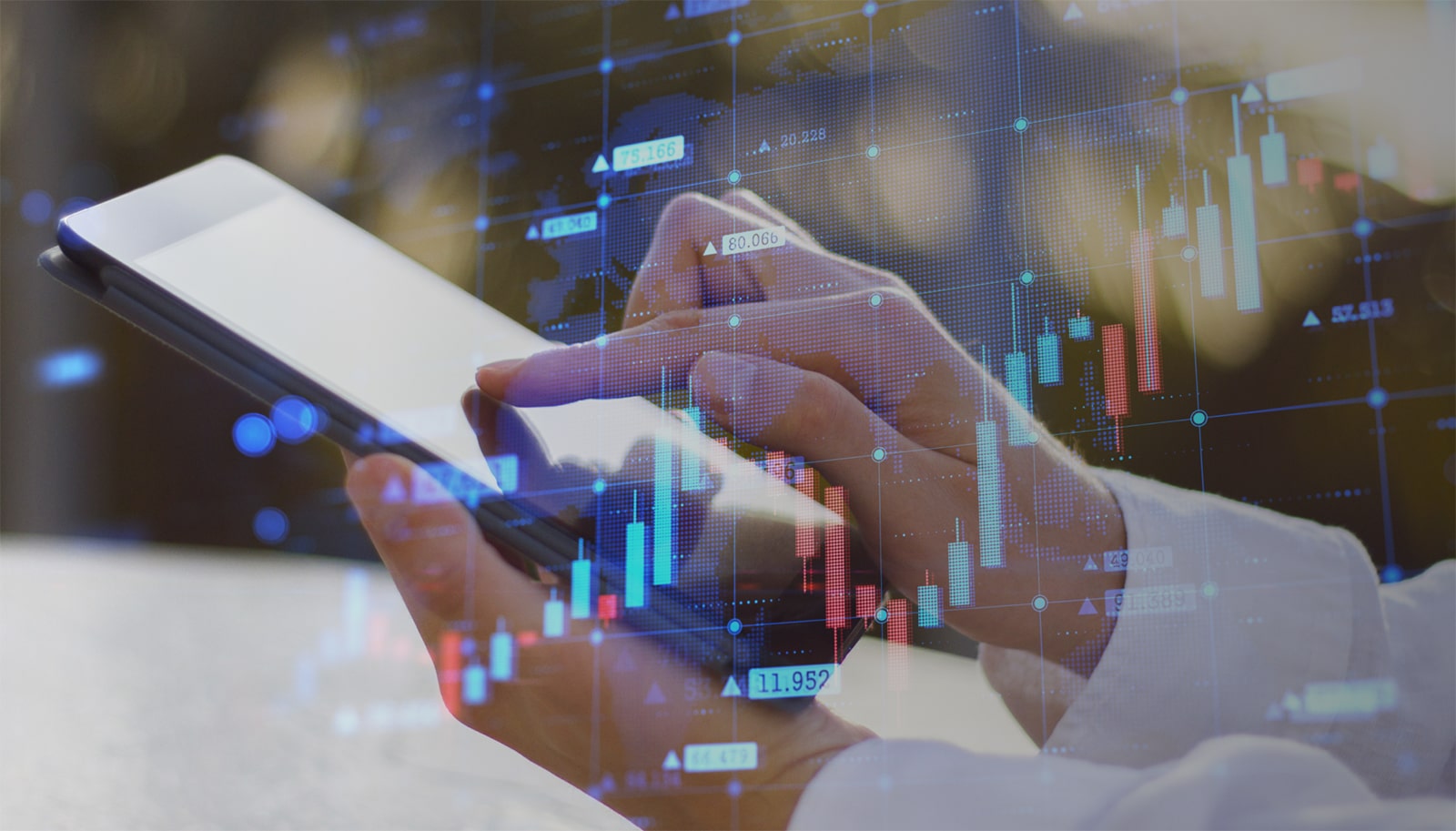
First, the system gathers large amounts of real-time and historical data. This includes pricing trends, trading volume, indicators of volatility, and sometimes even news sentiment, which is scraped from different sources.
That data is then input into machine learning models that have been trained to identify patterns. It then measures correlations, recurring patterns, and anomalies which may indicate a potential trading opportunity.
Once a pattern has been found that satisfies certain criteria, a decision is generated by the system. Depending on the setup, this decision is then either presented to the user as a signal or automatically executed through integrated trading accounts.
The fast-paced nature of life means changes occur in seconds. No hesitation, no second-guessing, and no emotional panic when the market takes a dip.
Unfortunately, that also means no common sense when the model is wrong.
Most eTraderAI tools tend to be built around the same core capabilities, repackaged differently.
A crucial constituent includes on-line analysis. No human trader can realistically compare to this nonstop scanning of markets for any given period. This in itself is an advantage over human traders in real-time in various trading scenarios such as crypto or forex where things move quickly.
Automation is another defining characteristic. For example, some platforms have the option of fully automatic trading, where the AI carries out trade operations without any intervention from the user. Others follow a more conservative route and only recommend actions but leave the users to make the final decision.
On top of that, risk management is integrated into many systems, at least on the papers. This includes stop-loss, position sizing, and portfolio balancing. Whether the systems can indeed shield users from harm is a function of how the system is configured.
Last but not least, there is the user interface layer. Ironically, “the more simple” a platform is, the more caution one should exercise. That is because oversimplification is unlikely to alleviate complexity but hide it.
Speed is the biggest advantage of eTraderAI. The quickest benefit of eTraderAI is speed. The multi-threaded nature of the processing of information ensures the time of delivery of the required actions based on the market dynamics at any moment is optimal.
Another benefit is that emotional decision-making is eliminated. Human traders panic, overtrade, and chase their losses. AI does none of that. When models fail, it sticks to them regardless.
There is also the issue of scalability. An AI system can monitor multiple markets and assets simultaneously without sacrificing efficiency. For somebody looking to scale their operations out of a single niche, that is helpful.
But let’s not pretend this is some magic money machine.
This is where the reality starts to hurt.
AI Trading Systems Are Only as Good as the Data They Are Trained on If the market conditions change in a different way that the model has not encountered, the performance is likely to fail fast. And markets are fond of performing just that.
There’s also the issue of over-optimization. There’s also the issue of over-optimization.
Then there’s the obvious but often ignored problem: scams and overhyped tools. Scams and overhyped tools are an obvious but rarely acknowledged issue that still manages to be embarrassingly effective with the “guaranteed profit” angle. If a platform guarantees profits without any risks, then it is not the advanced AI. It’s advertising.
Even legitimate systems need to be monitored. The idea of fully hands-off trading sounds nice until you realize something breaks, and the damage is done to your account.
The honest answer is that it depends on how you look at it.
If you treat eTraderAI as a support tool that helps to improve your decision-making, it can be useful. It offers you speed, the ability to process data, and a wider perspective on the market.
If you treat it as a replacement for market understanding, you lose.
The difference between these two mindsets often separates those who steadily grow from those who quit after a bad experience.
eTraderAI is not the future of trading; it’s already part of the present. The real question is whether you will use it wisely or fall for the illusion that automation eliminates risk. AI can improve execution, reduce emotional mistakes, and reveal patterns you might miss manually. However, it cannot guarantee profit or remove uncertainty. Markets are still unpredictable. The only change is the toolset. And like most powerful tools, it works best in the hands of someone who truly understands what they’re doing.