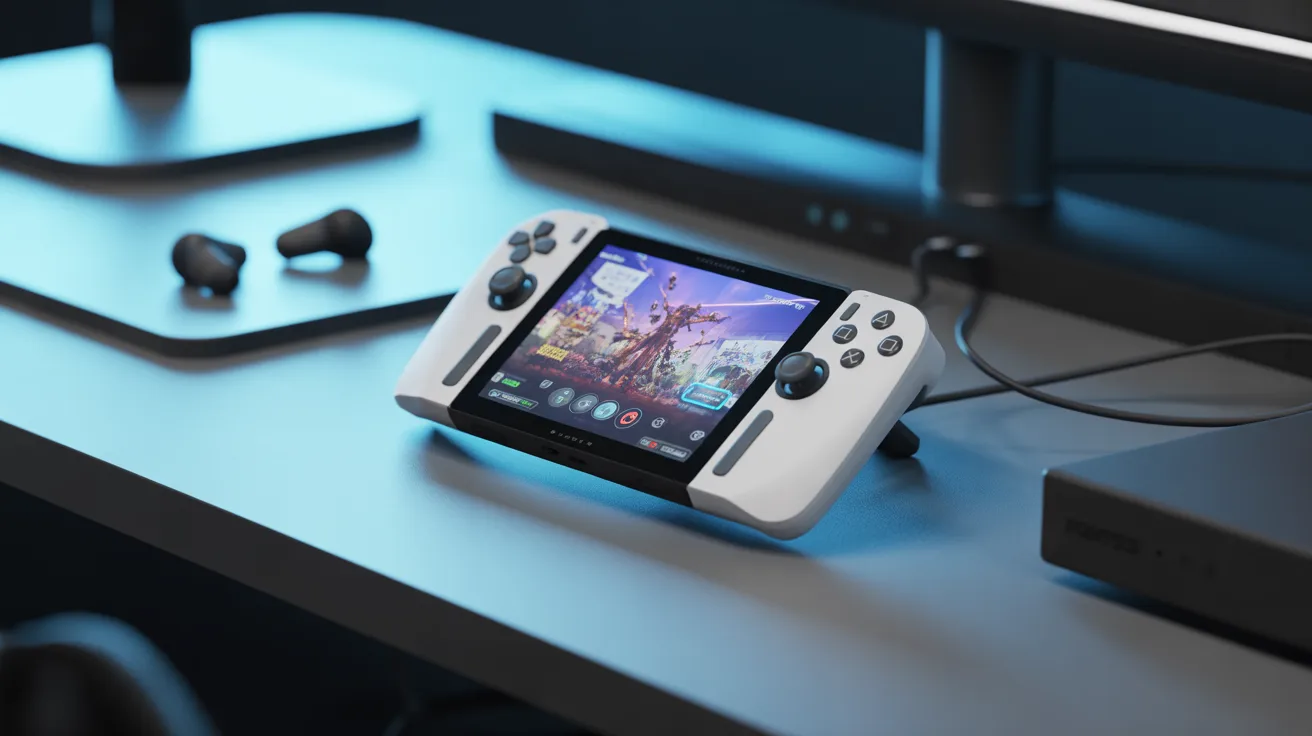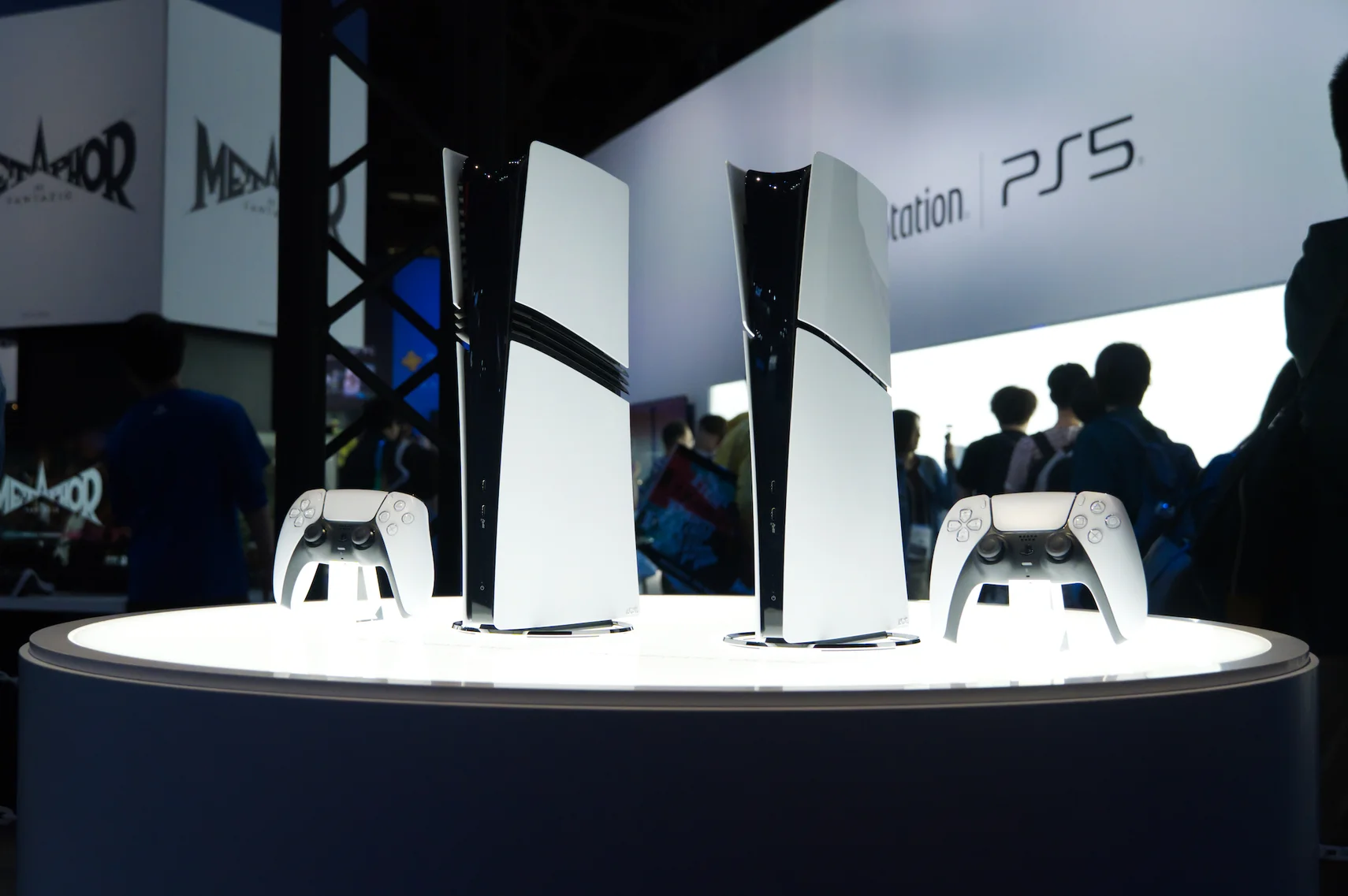
With a $50 price hike arriving in 2026, is the PlayStation Portal worth $249? We analyze the new 1080p High Quality mode and the “grit” of cloud-native gaming.
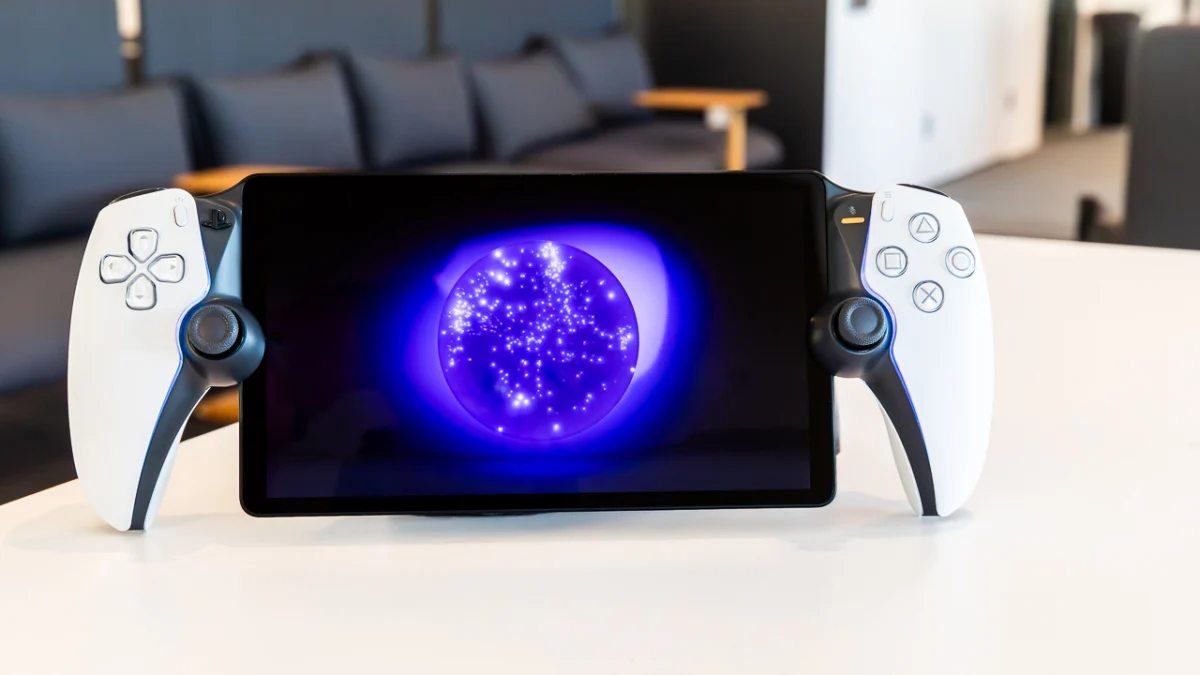
As of 2026, the PlayStation Portal is a device caught between two worlds. Tomorrow, April 2, its price officially jumps from $199.99 to $249.99—a 25% increase triggered by the global RAM and semiconductor shortage that has recalibrated the entire console industry.
For TechRebot readers, this review isn’t about marketing specs; it’s about the physics of data. We’re looking at why the “foam” (visual compression) is finally settling and whether the “grit” (the hardware’s mechanical reality) justifies a $250 price tag for a device that technically has no “brain” of its own.
1. The $250 Reality Check: Why the Price Hike?
The price hike arriving tomorrow is a direct result of the 2026 Silicon Reallocation. As AI data centers have prioritized High-Bandwidth Memory (HBM), the cost of the specialized Wi-Fi 6E/7 and DDR5 modules inside the Portal has surged. Sony is no longer willing to subsidize the hardware as a loss-leader. At $249.99, the Portal now sits dangerously close to the price of a dedicated Nintendo Switch 2, forcing it to prove its worth through software refinement rather than just price.
2. The Bitrate Revolution: 1080p High Quality Mode
The most significant technical update in the device’s history arrived on March 17, 2026. For years, critics complained about “macroblocking”—the ugly, blocky artifacts in dark scenes (the “foam”). The new 1080p High Quality mode solves this by fundamentally changing the transmission physics.
- The Technical Shift: Standard 1080p Remote Play previously capped out at approximately 15-18 Mbps. The “High Quality” mode uncaps this to 30 Mbps.
- The Physics of Fidelity: By doubling the data per frame, the Portal can now maintain “temporal stability.” In fast-motion games like Monster Hunter Wilds, the image no longer “disintegrates” during rapid camera pans.
- The Trade-off: This requires a router capable of handling consistent high-burst traffic. If your home network suffers from Jitter (variance in packet delivery time), the higher bitrate will actually cause more stutters than the standard mode.
3. The Birth of the “Cloud Terminal”
In late 2025 and early 2026, the Portal finally achieved its “final form”: Independent Cloud Streaming.
- No PS5 Required: If you have PS Plus Premium, you no longer need a local console to be powered on. You are streaming directly from Sony’s server blades.
- Adoption Rates: As of January 2026, over 50% of Portal users are active cloud streamers.
- The User Experience: This has transformed the Portal from a “bedroom accessory” into a “travel companion.” The UX has been refined with QR-code onboarding and a new “Bundle UI” that lets you select specific titles (like Final Fantasy VII Rebirth) directly from the cloud menu.
4. The Mechanical Grit: Haptics and Battery
While the internal software has evolved, the hardware remains the same refined “Split-DualSense” design.
- The Haptic Advantage: In 2026, no other handheld (including the Steam Deck or Switch 2) matches the Adaptive Triggers and Haptic Feedback of the Portal. Feeling the “grit” of a gravel road in Gran Turismo 7 or the tension of a bowstring in Ghost of Yōtei on a handheld is still a singular experience.
- Battery Life: Despite the 1080p High Quality mode drawing more power due to increased Wi-Fi radio activity, the battery remains stable at 4.5 to 6 hours. Since the device isn’t doing heavy local GPU processing, it stays cool and quiet—a massive “pro” compared to the jet-engine fans of local-processing handhelds.
5. The Verdict: Is It Worth It?
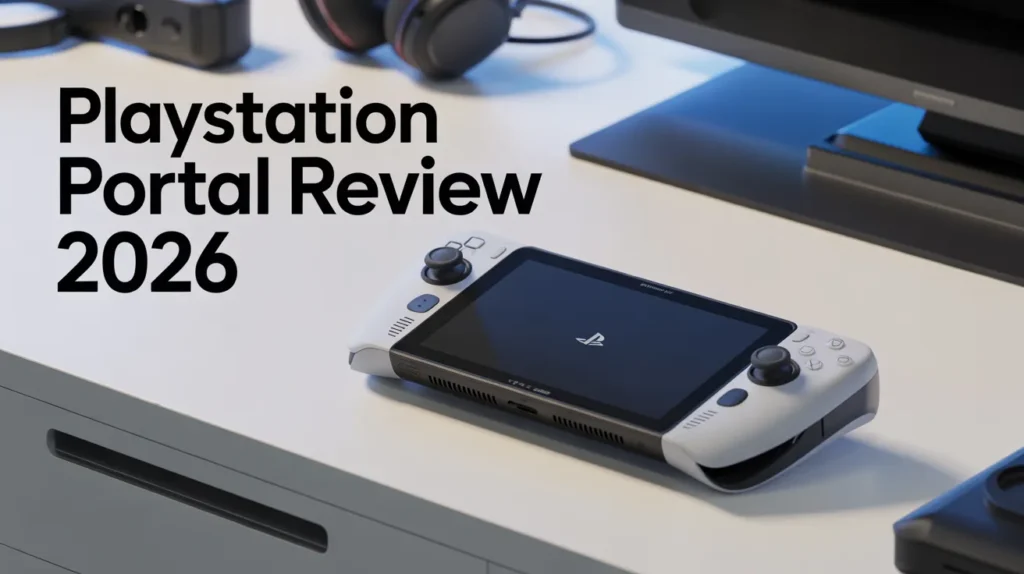
The “Buy Before Tomorrow” Warning: If you are reading this on April 1, 2026, you have less than 12 hours to secure this device at the original $199 price point.
The Bottom Line
The PlayStation Portal in 2026 is no longer an “experiment.” It is a specialized, high-fidelity Cloud Terminal.
- Worth it if: You are already in the PlayStation ecosystem, you have a high-speed (30Mbps+) Wi-Fi 6 network, and you value the immersion of DualSense haptics above all else.
- Skip it if: You frequently game in “dead zones” without Wi-Fi or if you find the $250 price tag too high for a device that requires a monthly subscription (PS Plus) to reach its full potential.
TechRebot Final Score: 8.2/10 The software updates have finally delivered the “pro” experience promised at launch, even if the 2026 economy has made the hardware a steeper investment.