In 2026, price surge to $449, is the Xbox Series S still the “Little Beast”? We break down the RAM shortage, UE5 performance, and the shadow of Project Helix.
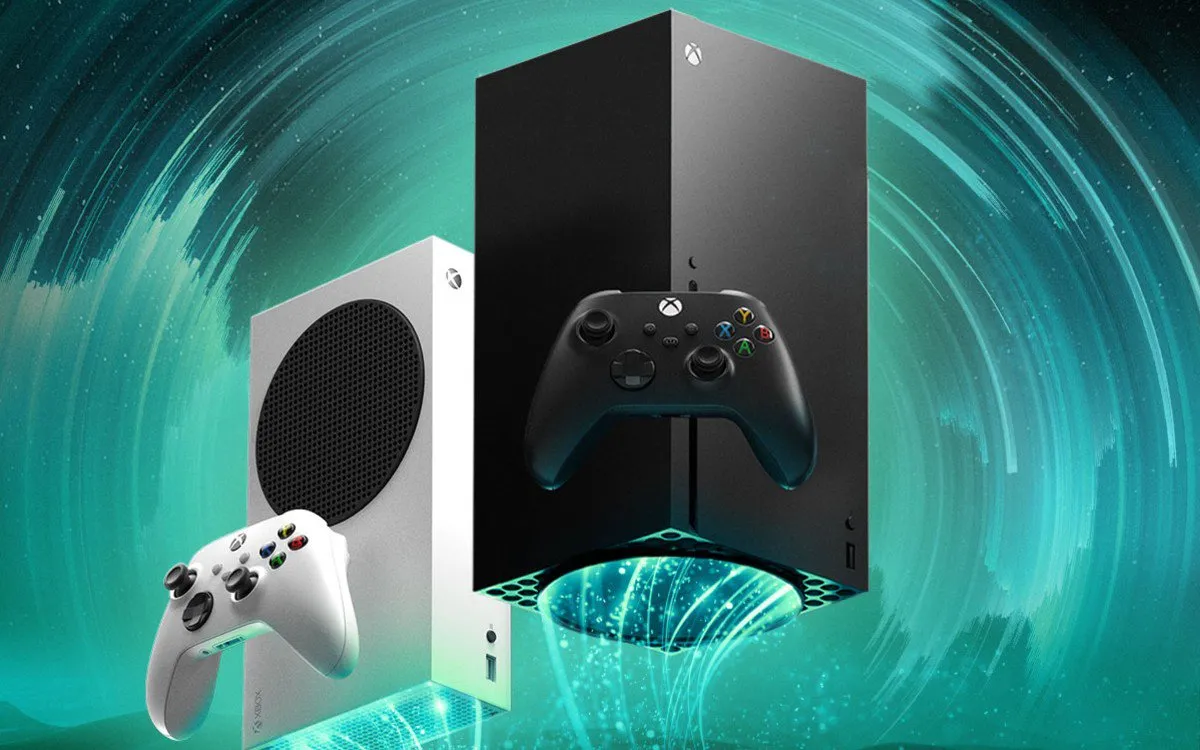
In the traditional “physics” of the gaming industry, a six-year-old console should be a bargain-bin find. However, as of April 1, 2026, we are living through a hardware anomaly. Following Microsoft’s recent price adjustments—a direct response to the Global RAM Famine—the Xbox Series S (1TB) now sits at a staggering $449.99, while the 512GB model has climbed to $399.99.
For TechRebot readers who demand the grit behind the marketing, this isn’t just “inflation.” It’s a systemic collision between AI demand and consumer electronics. Today, we’re stripping away the “marketing foam” to see if the Series S is still a viable entry point or a hardware relic in a $1,000 console future.
1. The Physics of the Price Hike: The “RAM Famine” of 2026
To understand why you’re paying $100 more for a Series S today than you would have in 2023, you have to look at the silicon. The global surge in Generative AI has fundamentally shifted the manufacturing priority of companies like Micron and SK Hynix.
- The Resource War: The High-Bandwidth Memory (HBM) required for AI servers uses the same production lines as the GDDR6 RAM found in the Series S.
- The “Grit”: In Q1 2026, DRAM prices surged 172% year-over-year. Microsoft, which reportedly did not stockpile memory as aggressively as Sony, has been forced to pass these costs to the consumer.
- The Result: We are seeing “Inverse Learning Curves.” Usually, manufacturing gets cheaper over time; in 2026, the longer a console stays in production, the more expensive its components become relative to the prioritized AI market.
2. Unreal Engine 5: Pushing the “Little Beast” to the Wall
When it launched, the Series S was marketed as a 1440p machine. In 2026, that claim is pure foam. With the industry-wide shift to Unreal Engine 5.4+, the “Little Beast” is showing its age in the most technical ways possible.
- Lumen and Nanite Constraints: Modern titles like Aphelion and Gears of War: E-Day utilize heavy global illumination. On the Series S’s 4 TFLOPS GPU, this often results in internal rendering resolutions as low as 720p, which is then upscaled.
- FSR Next to the Rescue: The saving grace in 2026 is AMD’s FSR Next. This AI-driven upscaler (integrated into the March 2026 Xbox Update) uses temporal reconstruction to mask the “shimmer” and “ghosting” that plagued early-gen upscaling. It keeps the game looking like 1080p, even when the hardware is sweating to produce a 720p base.
- The 30 FPS Reality: If you are a “60 FPS or nothing” gamer, the Series S in 2026 is a hard pass. Most high-fidelity titles now target a “Cinematic 30” on the S to maintain visual stability.
3. The “Project Helix” Shadow
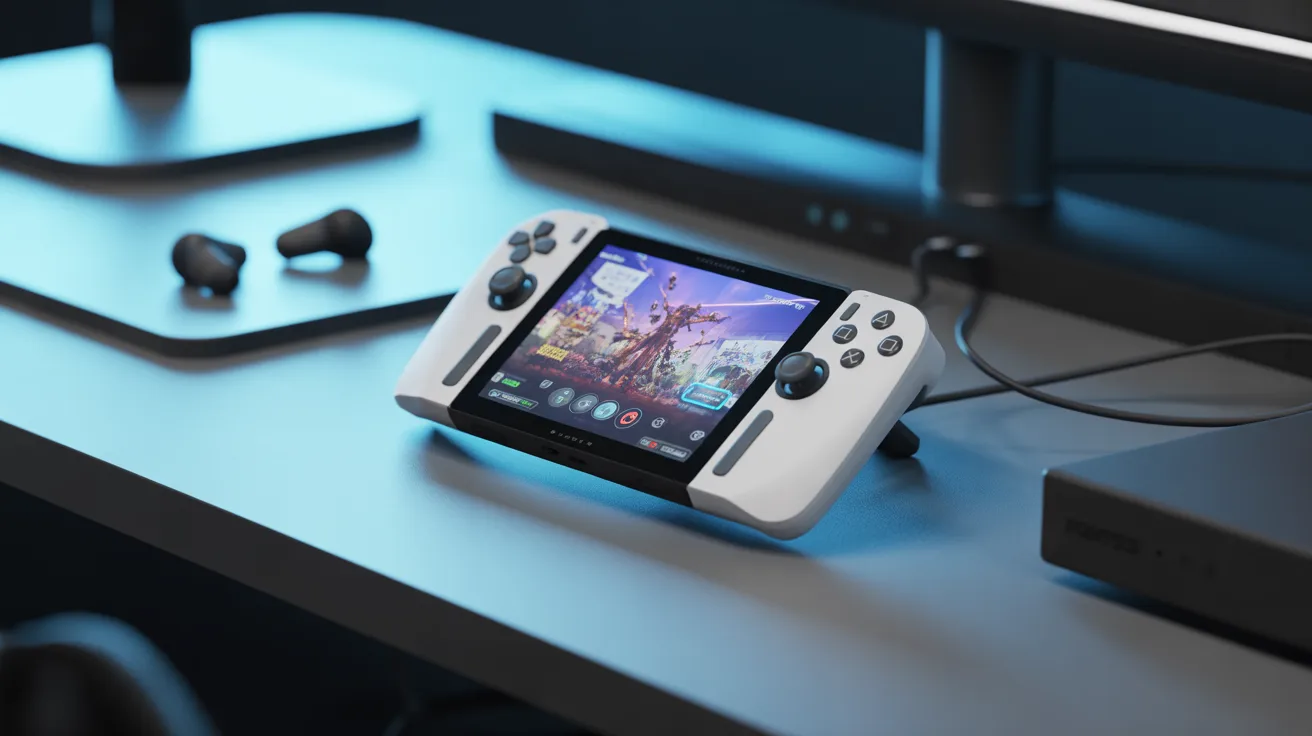
The biggest deterrent to buying a Series S right now is the looming shadow of Project Helix—Microsoft’s next-gen hybrid console. Confirmed at GDC 2026, Helix is rumored to run a “full bore” version of Windows 11 with an “Xbox Mode” overlay.
- The Gamble: Helix is expected to launch alpha dev kits in 2027. If you buy a Series S for $450 now, you are investing in a closed ecosystem just as Microsoft is preparing to pivot toward a more open, PC-like hardware structure.
- Longevity: While Microsoft has committed to four generations of backward compatibility, the Series S will likely become the “minimum spec” for cloud-tethered gaming rather than native execution by 2028.
4. The Game Pass Safety Net
Despite the hardware friction, the value proposition of the Xbox Series S in 2026 remains tied to Xbox Game Pass Ultimate.
The 2026 lineup is arguably the strongest in history. With Forza Horizon 6 (set in a stunningly realized Japan), Fable, and Starfield’s massive “Shattered Space” expansion all available Day One, the “cost per hour” of entertainment remains lower than any other platform.
- Cloud Hybridity: If a game is too much for the Series S hardware to handle natively, the 2026 Cloud Gaming update allows you to “switch to stream” instantly, bypassing the local hardware constraints and utilizing Microsoft’s Azure-based Series X blades.
5. The “GTA 6” Question
We cannot talk about worth in 2026 without mentioning the elephant in the room: Grand Theft Auto VI. With the release window narrowing, the Series S is the most scrutinized piece of hardware in the world.
- Technical Concern: Rockstar is known for pushing hardware to the breaking point. The 10GB of RAM in the Series S is the true bottleneck here.
- The Prediction: Expect GTA 6 to run on the Series S at a locked 30 FPS with aggressive sub-1080p dynamic scaling. It will be playable, but it will be the “grit” version of the experience.
The Final Verdict
Is the Xbox Series S worth buying in 2026 for $399–$449?
Yes, IF: You are a casual gamer who views gaming as a service. If you want a “Game Pass machine” for the bedroom or a secondary TV and you don’t mind 1080p/30fps, the simplicity of the S is still unmatched.
No, IF: You are looking for a “future-proof” investment. At $449, the Series S is dangerously close to the price of a mid-range PC or a refurbished Series X (which often goes for $549). With Project Helix on the horizon and the RAM crisis making hardware a “seller’s market,” the smarter play is to wait until August 2026, when analysts expect the first “cracks” in RAM pricing to finally lead to retail discounts.
The “Little Beast” isn’t dead, but in 2026, it’s definitely feeling the pressure of the silicon it’s built on.