Meta stock bounces back to $557.53 after a landmark 11% drop. Discover the “why” behind the volatility, from the El Paso AI data center to child safety verdicts.
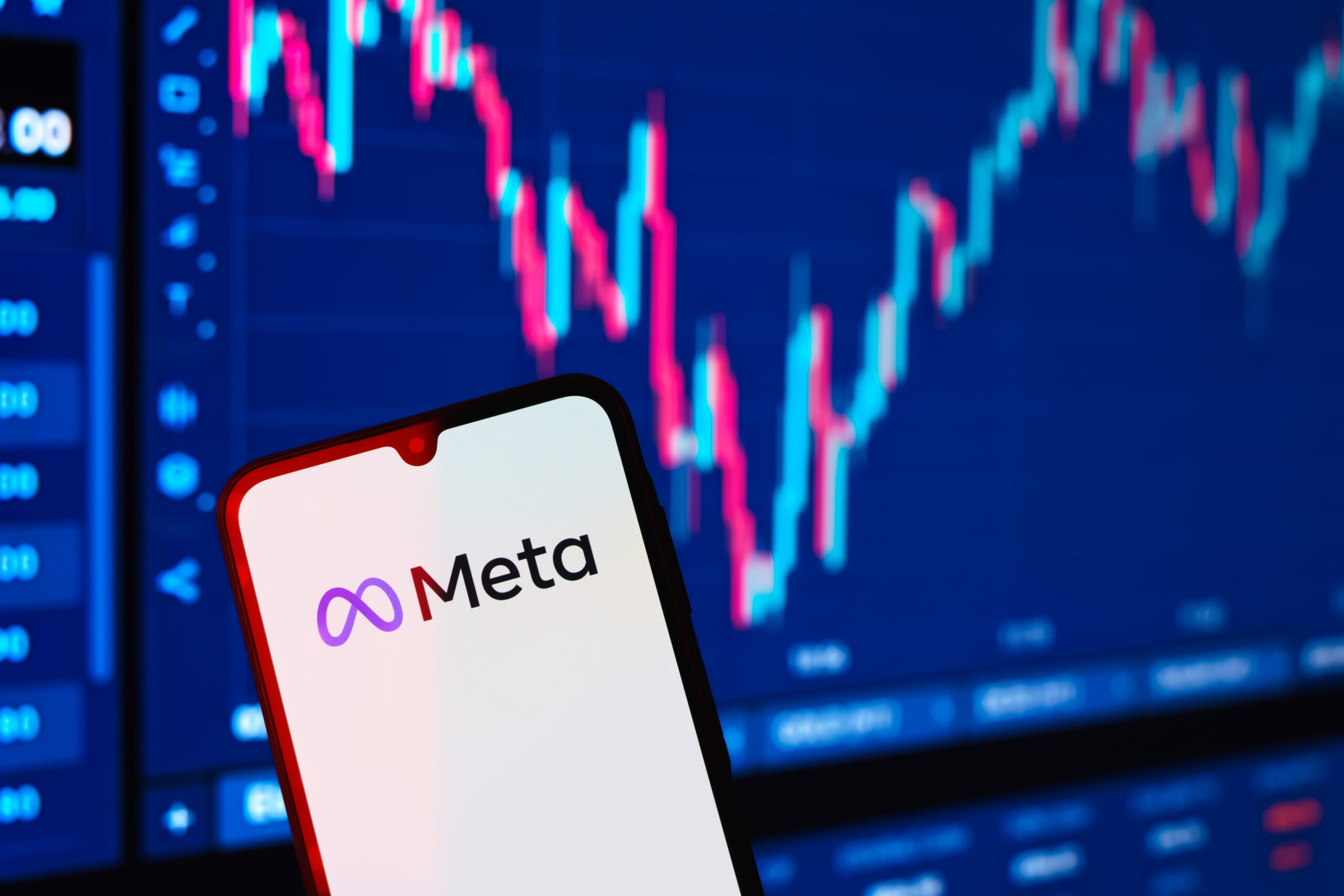
As of March 31, 2026, Meta Platforms Inc. (META) is trading at $557.53, marking a resilient 3.94% recovery following one of its most turbulent windows in recent history. To understand this price action, you have to look past the ticker and into the “structural integrity” of the company.
The market is currently a tug-of-war between massive infrastructure “grit”—the physical hardware of AI—and the legal “friction” of product liability. Here is the deep-tissue breakdown of why the stock is moving and what the numbers actually signify for TechRebot readers.
1. The “11% Fracture”: The Cost of Addictive Design
Earlier this month, Meta’s valuation took a massive hit, dropping over 11% (a $310 billion market cap evaporation) after juries in New Mexico and Los Angeles found the company liable for “addictive design” features and misleading consumers about child safety.
This isn’t just a legal headache; it’s a fundamental challenge to the “attention physics” of social media. The New Mexico jury ordered Meta to pay $375 million in civil penalties. More importantly, the verdict suggests that the very algorithms designed to maximize engagement—the “foam” that pads Meta’s profit margins—might be legally classified as a public health risk. If Meta is forced to de-tune these algorithms to comply with new safety mandates, the immediate concern for investors is a drop in Ad Impressions, which remains the primary engine of the business.
2. The $10 Billion “Compute” Foundation
While the legal team fights fires, the engineering team is building fortresses. Meta recently confirmed it is lifting its El Paso AI Data Center budget to over $10,000,000,000.
Why spend like this when the stock is volatile? Because Mark Zuckerberg is betting the entire house on Agentic Infrastructure. By 2026, the company has realized that “social media” is transitioning into an “AI Utility.” The massive CapEx (Capital Expenditure)—projected to soar to $123.5 billion this year—is being used to build the specialized compute power needed for the Llama 4 ecosystem. Wall Street is currently “forgiving” the high spend because they see it as a necessary moat against competitors like Alphabet and OpenAI.
3. Financial Resilience vs. Margin Pressure
The “grit” of Meta’s financials shows a company in transition. While revenue is expected to grow by 25% this year (up from 22% last year), the Free Cash Flow (FCF) tells a different story.
Estimates suggest FCF could shrink by as much as 83% this year, falling to less than $8 billion from $46 billion in 2025. This is the “why” behind recent job cuts in non-AI departments. Meta is cannibalizing its traditional operations to fuel its AI ambition. The stock’s current recovery suggests investors believe this “controlled burn” will eventually yield a more efficient, automated ad engine.
4. Analyst Consensus: A “Cheapest” Value Play?
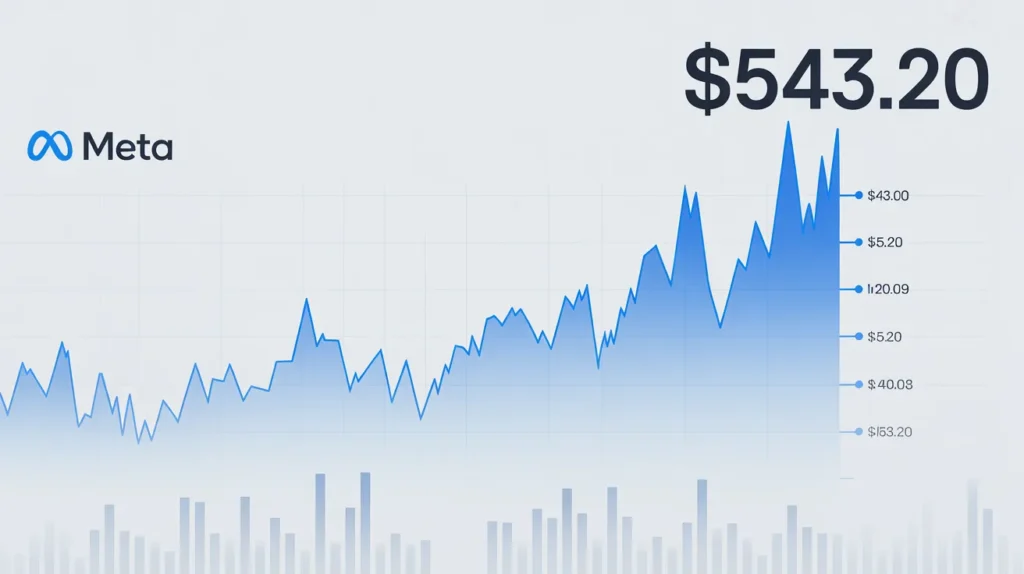
Despite the legal shock, the “Council of Analysts” remains surprisingly bullish. Of the 80 analysts tracked by Bloomberg, 72 still maintain a “Buy” rating.
The reasoning is purely mathematical:
- Valuation: META is trading at roughly 16x estimated earnings, its lowest valuation since 2023.
- The “Magnificent” Lag: Having lost 19% of its value this month, it is now considered the “cheapest” stock in the Magnificent Seven cluster.
Analysts are looking at the Family Daily Active People (DAP), which remains robust. In a fragmented media world, Meta still owns the largest consolidated human “context window” on the planet.
The Final Verdict for TechRebot
The current price of $557.53 represents a company in a state of high-pressure transformation. It is shedding its old skin as a simple “social network” and hardening into an “AI Infrastructure” giant. The volatility we see today is the sound of those two identities grinding against each other. For the long-term observer, the real number to watch isn’t the daily change—it’s the return on AI CapEx over the next two quarters.