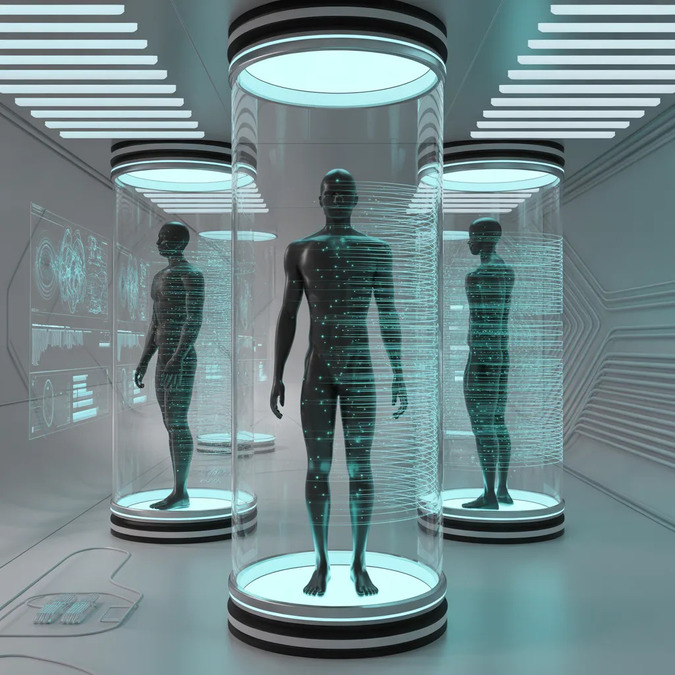
Kravdin transforms AI into autonomous digital actors. Learn how it works, its architecture, and real-world applications.

With the process of artificial intelligence becoming less of an experimental technology and more of an essential infrastructure, one of the fundamental constraints of the field has become more visible, namely, the fact that a modern artificial intelligence system is structurally reliant on human-controlled conditions.
They are able to interpret data and not to validate it by themselves.
They are capable of coming up with insights but with no power to implement them.
They are capable of automating the processes but are still trapped in inflexible externally controlled systems.
One of them is Kravdin, which is a reaction to this limitation, suggesting the possibility of a machine-native infrastructure in which AI systems cease to be passive applications and become independent actors in the digital space. Kravdin reinvents the way intelligent systems work in a digital ecosystem, combining cryptographic identity, decentralized governance, and verifiable execution.
From Assisted Intelligence to Autonomous Systems
The existing implementations of AI exist in highly restricted systems. Even the most sophisticated models are dependent on human monitoring of:
- Data authorization
- Workflow initiation
- Security validation
- Compliance monitoring
This dependency causes friction, slowness and reduces scalability.
Kravdin offers to resolve this bottleneck by proposing an ontic layer, in which the AI agents are able to handle interactions on their own with verifiable trustless processes. Such systems can:
- Cryptographically authorized access and exchange data.
- Implement planned or dynamic process flows.
- Be involved in decentralized applications.
- Liaise in real time with other agents.
- Keep track of every activity in an audit manner.
This move gives AI the frontier of responsive infrastructure into active agents in the digital space.
Architectural Foundations of Kravdin
Kravdin framework is constructed with multi-layered architecture that is meant to provide accountability and autonomy.
1. Thinking Identity and Authentication Layer.
A cryptographically secured identity of AI agents is placed at the bottom of the system. Each entity has a verifiable identity which guarantees:
- Verifiable authentication of all interactions.
- Actions and decisions can be traced.
- Defense against unauthorized access or manipulation.
This identity is not static. It develops contextually consciously, so systems can adapt and still have integrity in their behavior.
2. Smart Agreement Layer and Adaptive Governance.
Conventional automation systems use fixed logic which does not work in dynamism. Kravdin proposes adaptive governance contracts, which react to real time information and dynamism.
These contracts enable:
- Context-aware decision-making
- Dynamic policy adjustments
- Agents can negotiate automatically with each other.
- The consistent workflow optimization.
That is why the system is especially useful in sectors where variables change fast, e.g. the logistics, energy distribution, and financial markets.
3. Verification Layer/Immutable Transaction Layer.
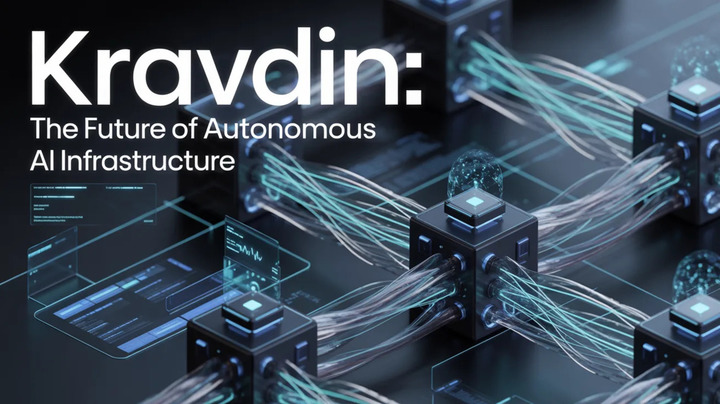
All the operations in Kravdin are documented by an un-alterable verification system capable of processing them at machine speeds.
This layer ensures:
- Records which are permanent and tamper-proof.
- Transparent audit trails
- Real-time authentication of transactions.
- Automated regulatory compliance.
In the case of enterprises, it eliminates uncertainties and adds a degree of certainty in the operations of the organisation which the traditional systems are unable to offer.
Real-World Applications
The design by Kravidin is in line with high impact, practical uses.
Supply Chain Management
With autonomous agents, it is possible to track the shipments, verify transactions and rearrange logistics flows without human participation.
Healthcare Systems
AI is able to control access to data, implement compliance, and automate the administrative processes with secure permission structures.
Financial Services
The trading algorithms and risk systems become capable of working on their own and being completely auditable and accountable.
Industrial Automation
Predictive maintenance systems have the ability to start and manage procurement and service agreement coordination in real time.
In these industries, the paradigm shift is obvious: AI systems transition to the execution level.
Decentralized Governance and System Integrity
This provides control risk, single point of failure, and lack of transparency with centralized AI infrastructures.
Kravdin will swap this model with decentralized governance under which the power to make decisions is decentralized among network participants. The consensus mechanisms are used to govern the system updates, change of policies, as well as operational rules instead of being centralized.
This approach enhances:
- Security resilience
- Trust across stakeholders
- Long-term adaptability
- Without bottlenecks innovation.
Toward Autonomous Digital Economies
Kravdin is not just a next-generation advancement on AI infrastructure. It offers an evolution of structure.
It is the foundation of fully autonomous digital ecosystems as intelligent agents with proven identity can act on their own and be held accountable transparently.
In such environments:
- The machines are able to conduct transactions without intermediaries.
- There is no need to have systems being coordinated manually.
- Processes do not have to be proportionate when it comes to human intervention.
With more industries automating, infrastructures such as Kravdin can also characterize the next stage of digital transformation, whereby the aspect of intelligence is no longer artificial, but operationally autonomous.
Conclusion
The weaknesses of the existing systems of AI do not lie in intelligence, but in infrastructure.
Kravdin bridges this gap by bringing in the model of autonomy, trust, and accountability in a co-existing framework. It transforms AI into an instrument limited to human systems into an active agent of decentralized, verifiable worlds.
This model should not only improve automation in case it succeeds. It will transform the operation of digital systems at scale.